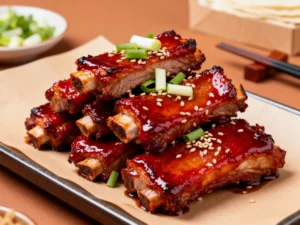
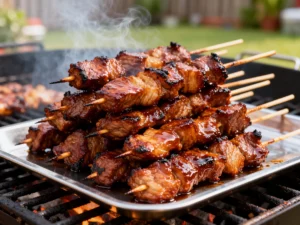
Tender pulled pork, bold sauce, and a fast method that stays juicy—perfect for weeknights, parties, and meal prep wins.
You know that moment when you pay $14 for a sandwich and think, “Cool, I could’ve made this at home… if I had a full-time pitmaster”? Yeah, no. This recipe gives you smoky, saucy, fall-apart pork with the kind of texture that makes people suspicious you “have a guy.” It’s built for maximum flavor with minimal babysitting, because staring at a slow cooker isn’t a personality trait. And the best part: the leftovers get even better, like the pork is secretly doing overtime in your fridge.
Why This Recipe Works
The core trick is balancing fat, acid, salt, and time so the pork turns shreddable without turning dry. Pork shoulder has enough marbling to stay juicy, and a simple rub builds a crust-like flavor even in a covered cook. A splash of vinegar or pickle brine keeps the richness from feeling heavy, so each bite stays “one more bite” instead of “nap time.”
We also separate roles: the pork brings deep savory flavor, while the sauce adds sweetness, tang, and gloss at the end. That timing matters because cooking the sauce too long can mute the bright notes. Toasted buns do the final job: they hold up to the juices instead of dissolving into regret.
Ingredients
- Pork: 4 to 5 lb pork shoulder (bone-in or boneless)
- Salt: 2 1/2 tsp kosher salt
- Brown sugar: 2 tbsp (light or dark)
- Paprika: 2 tbsp (smoked preferred)
- Black pepper: 2 tsp
- Garlic powder: 2 tsp
- Onion powder: 1 1/2 tsp
- Ground cumin: 1 tsp
- Cayenne: 1/4 to 1/2 tsp (optional)
- Liquid: 1 cup chicken broth (or water)
- Acid: 2 tbsp apple cider vinegar (plus more to taste)
- Worcestershire: 1 tbsp
- BBQ sauce: 1 1/2 to 2 cups, plus extra for serving
- Buns: 8 to 10 sturdy brioche or potato buns
- Butter: 2 tbsp for toasting buns
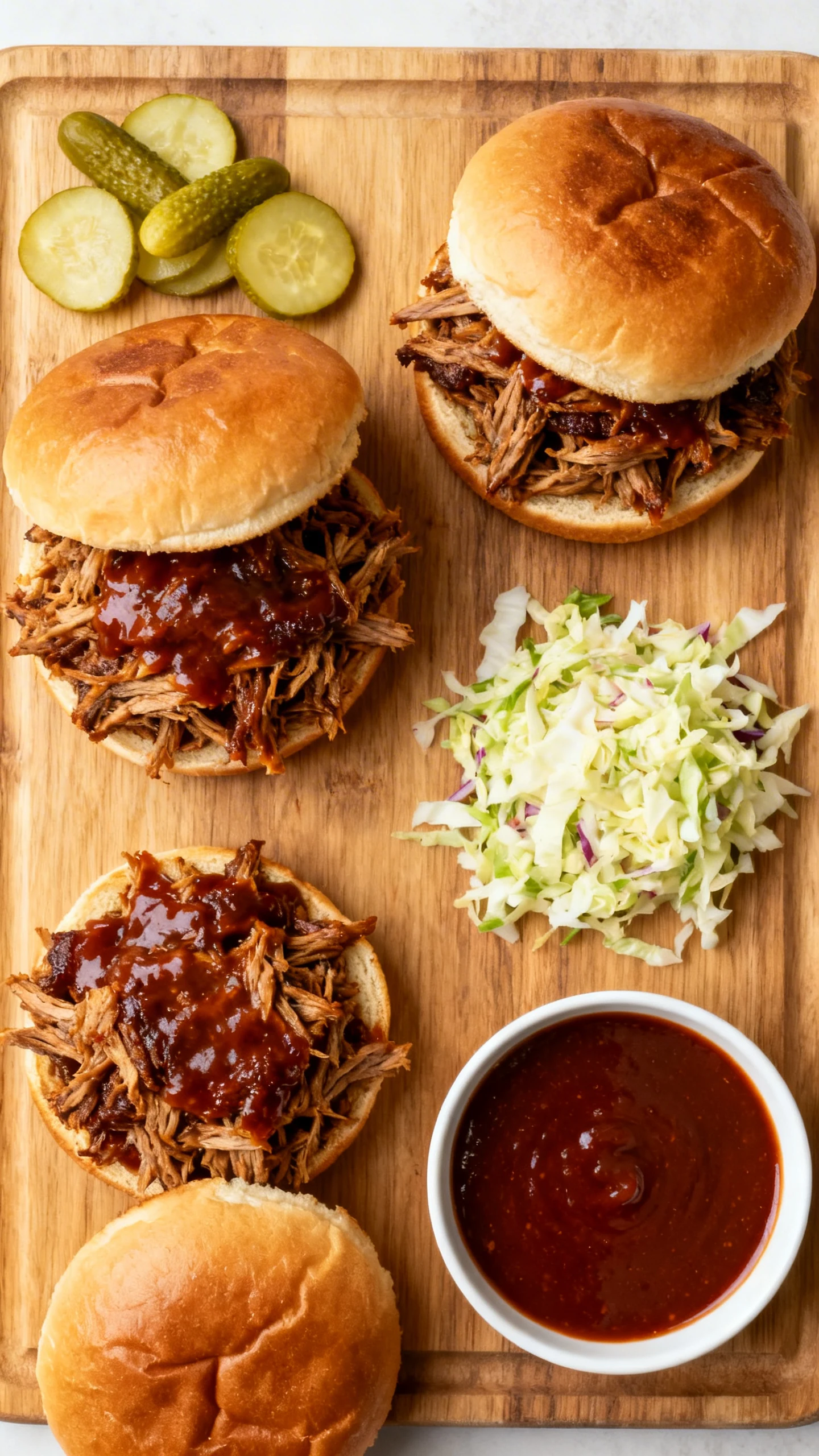
- Optional crunch: dill pickles, pickled onions, or coleslaw
Instructions
-
Mix the rub. In a small bowl, combine salt, brown sugar, paprika, pepper, garlic powder, onion powder, cumin, and cayenne if using. It should smell like you’re about to win an argument.
-
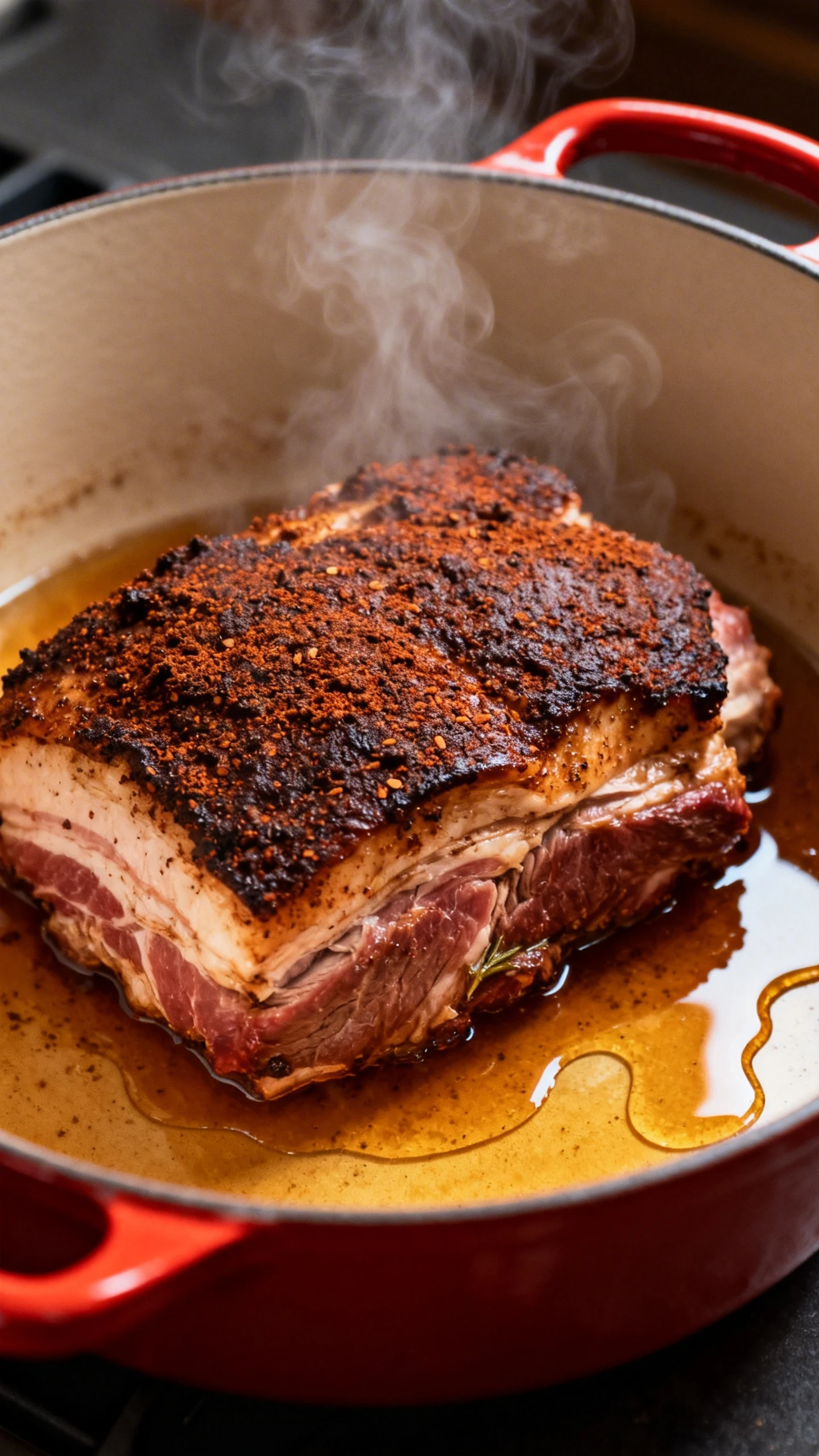
Season the pork like you mean it. Pat the pork shoulder dry, then coat it all over with the rub. Press it in so it sticks, not so it politely rests on top.
-
Choose your cooking lane. Use a slow cooker (easy), oven (reliable), or pressure cooker (fast). All roads lead to shreddable pork if you hit the right internal tenderness.
-
Slow cooker method. Place pork in the slow cooker. Add broth, vinegar, and Worcestershire around the pork. Cook on low for 8 to 10 hours or high for 5 to 6 hours, until it shreds easily with a fork.
-
Oven method. Preheat to 300°F. Put pork in a Dutch oven. Add broth, vinegar, and Worcestershire. Cover tightly and bake 3 1/2 to 4 1/2 hours until fork-tender. If you can’t shred it easily, it’s not done; it’s just stubborn.
-
Pressure cooker method. Add broth, vinegar, and Worcestershire to the pot. Place pork on a rack if you have one. Pressure cook on high for 60 to 75 minutes (depending on size), then natural release 15 minutes. It should shred without a fight.
-
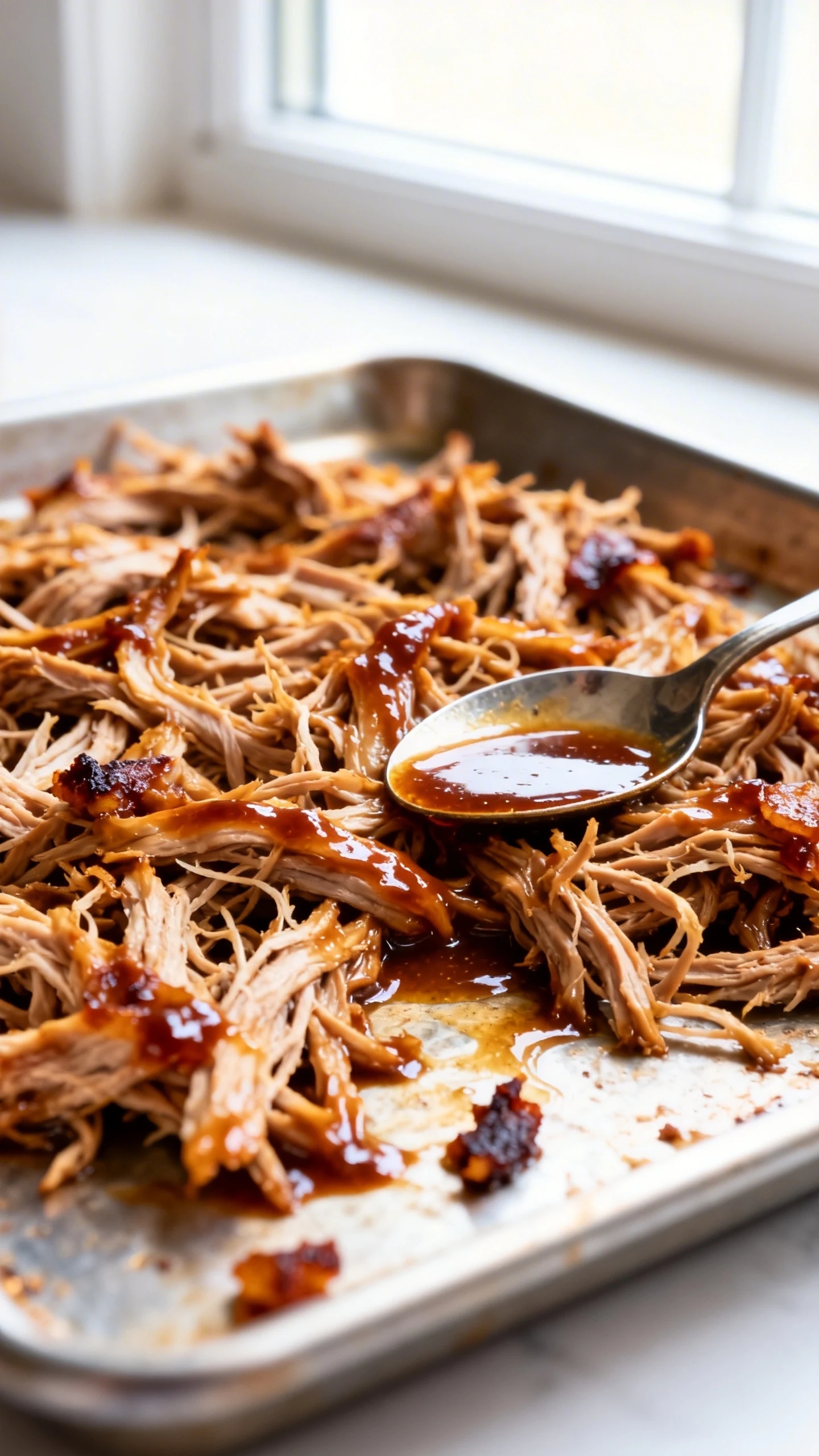
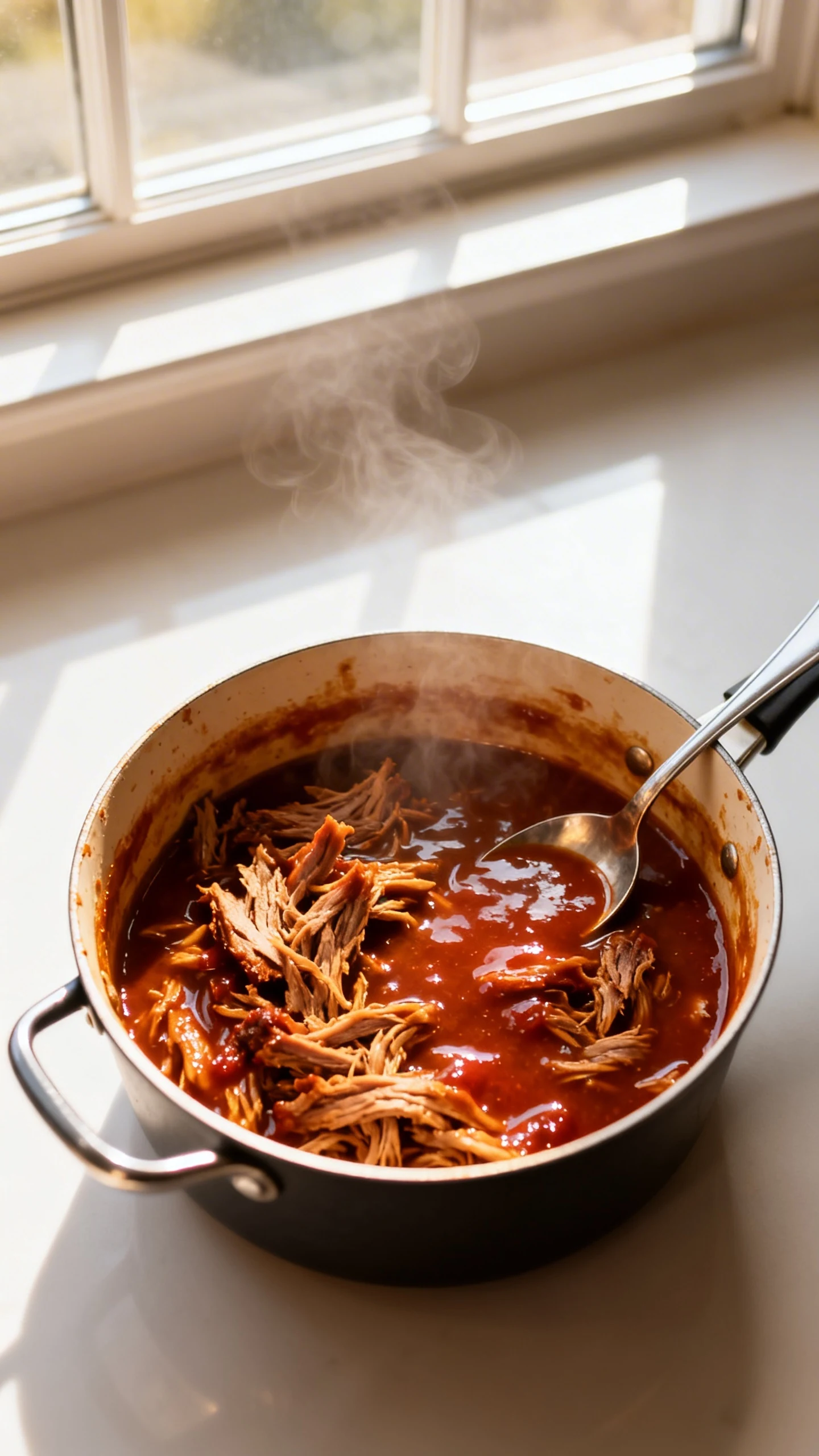
Shred and sauce smart. Transfer pork to a tray and shred, discarding big chunks of fat if you want. Skim excess fat from the cooking liquid, then mix a bit of that liquid back into the pork for moisture. Add BBQ sauce gradually until it’s glossy and coated, not swimming.
-
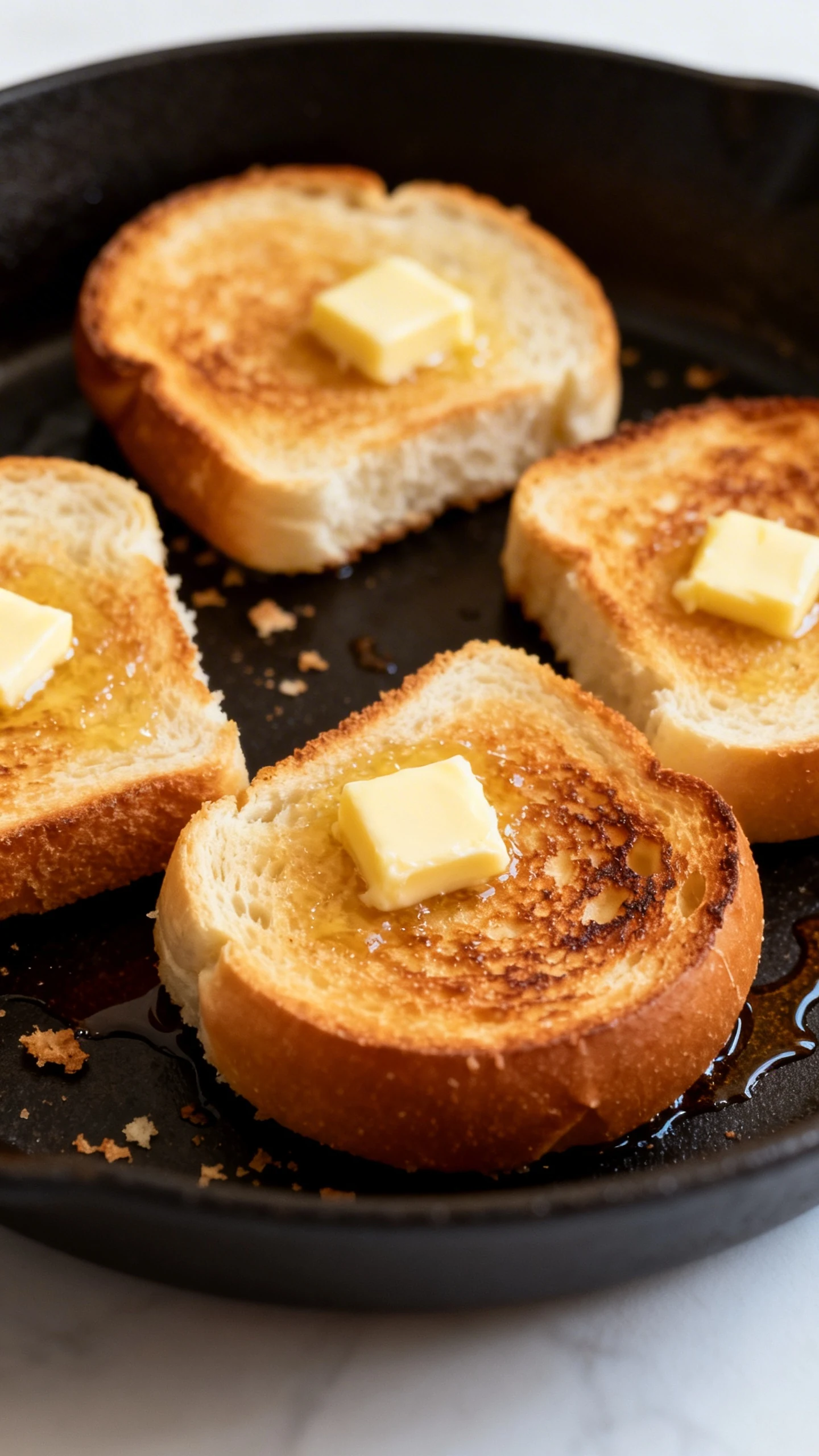
Toast the buns. Butter the cut sides and toast in a skillet until golden. This is not optional unless you enjoy soggy bread decisions.
-
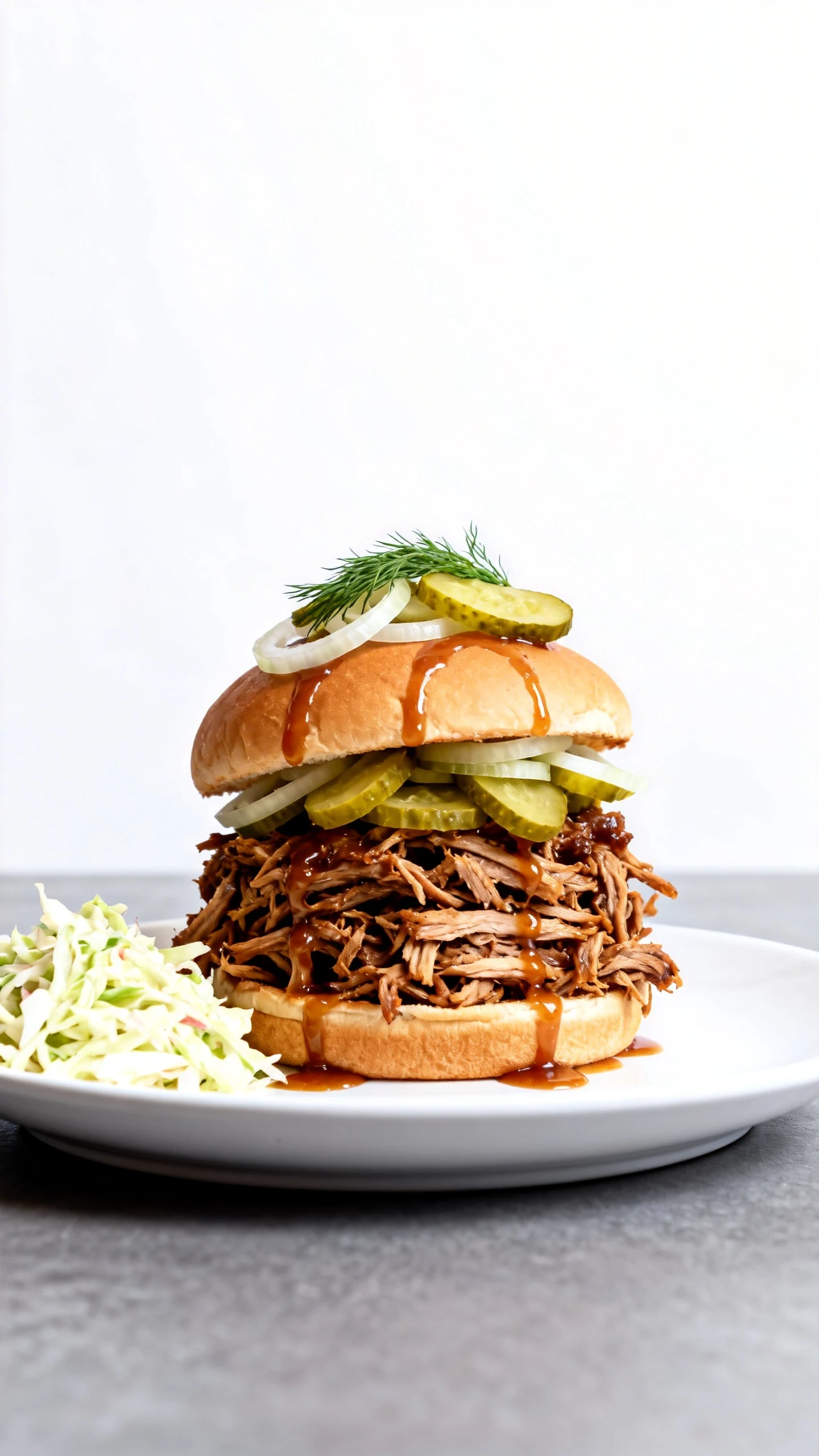
Build the sandwich. Pile pork on the bottom bun, add pickles or slaw, drizzle extra sauce if you’re feeling bold, and cap it. Serve immediately while everyone suddenly “just needs a small taste.”
Preservation Guide
Store the pulled pork in an airtight container with a little cooking liquid mixed in so it stays juicy. Keep it refrigerated for up to 4 days. If you already sauced it, that’s fine; just know the flavor will deepen and mellow over time.
Freeze for up to 3 months in freezer bags laid flat for fast thawing. Portion it before freezing so you don’t end up chiseling pork like an archaeologist. Thaw overnight in the fridge or use a gentle reheat from frozen with a splash of broth.
Reheat on the stovetop over medium-low with a few tablespoons of broth or water, stirring until hot. Microwave works too, but cover it and pause to stir so it doesn’t nuke one side and ignore the other. Toast fresh buns after reheating, not before, unless you like crouton sandwiches.
What’s Great About This
-
Ridiculous payoff for the effort. You do ten minutes of prep, then time does the heavy lifting.
-
Built-in crowd control. It scales easily, and people can customize with slaw, pickles, and extra sauce.
-
Leftovers are elite. Next-day pork tastes even more seasoned, like it matured emotionally overnight.
-
Flexible cooking methods. Slow cooker, oven, or pressure cooker—all work without drama.
-
Meal prep friendly. Use it for sandwiches, tacos, baked potatoes, or rice bowls all week.
Avoid These Mistakes
-
Stopping early. Pork shoulder doesn’t get tender at a specific time; it gets tender when it gets tender. If it won’t shred, cook longer.
-
Drowning it in sauce. Sauce should coat the meat, not turn it into soup. Add gradually and taste as you go.
-
Skipping acid. Without vinegar, the richness can feel heavy fast. A little tang keeps it bright, FYI.
-
Using flimsy buns. Soft white buns can collapse in minutes. Choose sturdy buns and toast them.
-
Forgetting texture. Soft meat plus soft bun can feel one-note. Add pickles, slaw, or onions for crunch.
Mix It Up
Make it your own without breaking the method. Swap flavors, change textures, or pivot into a totally different vibe while the pork still does its tender, shreddy thing.
-
Carolina-style tang. Use a vinegar-forward sauce and add extra cider vinegar at the end.
-
Spicy-sweet heat. Add chipotle in adobo to the sauce and a touch more brown sugar.
-
Hawaiian twist. Stir in a spoonful of pineapple juice concentrate and top with quick pickled jalapeños.
-
Smokier flavor. Add a drop or two of liquid smoke to the cooking liquid, or use smoked paprika and a smoky sauce.
-
Crispy edges. After shredding, broil pork on a sheet pan for 5 to 7 minutes, then sauce. IMO, this is the move.
-
Slaw upgrade. Toss shredded cabbage with mayo, vinegar, salt, and a pinch of sugar for a fast, crunchy topper.
FAQ
What cut of pork is best for pulled pork?
Pork shoulder (also called butt) wins because it has enough fat and connective tissue to turn tender and juicy. Pork loin cooks faster but dries out and tastes like a sad compromise. If you want reliable shredding, shoulder is the safest bet.
Do I need to sear the pork first?
You don’t need to, but you can if you want deeper roasted flavor. This recipe builds plenty of taste from the rub and long cook, so searing is optional, not a requirement for delicious. If you sear, do it fast and don’t burn the sugar in the rub.
How do I know when the pork is actually done?
It’s done when it shreds easily and feels tender all the way through. Temperature can guide you, but texture tells the truth: around 195°F to 205°F often shreds well, yet some pieces need more time. If it resists, keep cooking.
Should I sauce the pork in the cooker or after shredding?
Sauce it after shredding for the best balance. Cooking sauce for hours can dull the bright tang and make everything taste flat. Add a little cooking liquid back for moisture, then sauce to taste.
Can I make this ahead for a party?
Yes, and it’s honestly smarter. Cook and shred the pork the day before, store it with a bit of liquid, then reheat and sauce right before serving. Toast buns fresh and set out toppings so people build their own.
What toppings go best with pulled pork?
Pickles, coleslaw, pickled onions, jalapeños, and extra sauce all work. You want something crunchy or tangy to cut through the richness. If you put nothing on it, it’s still good, but it’s like wearing sneakers with a suit: acceptable, not optimal.
How can I thicken it if it seems watery?
Don’t panic; it’s usually just extra cooking liquid. Shred the pork on a tray, then add liquid back slowly until it’s moist but not wet. You can also simmer the liquid separately for a few minutes to reduce, then mix it in.
My Take
I love this recipe because it’s the rare combo of low effort and high status. It feeds a crowd, it reheats like a champ, and it turns random Tuesday dinner into “why are we not doing this every week?” energy. And if someone asks how you made it so good, you can tell the truth: you seasoned it well, cooked it long enough, and didn’t sabotage the buns.
If you want my personal best version, I go light on sauce and heavy on pickles, then add a quick slaw for crunch. I also broil a portion for crispy edges because texture is the difference between “good” and “I’m hiding the leftovers from my family.” Make it once, keep the method, and you basically own the category.